• Skip to primary navigation
  • Skip to main content

Powell's Tree Care Inc.

POWELL’S TREE CARE INC. ESTABLISHED SINCE 2013

  • HOME
  • ABOUT US
  • SERVICES
  • Info
  • FAQ
  • BLOG
  • CONTACT US
  • Store
  • Show Search
Hide Search

Powell's Tree Care Inc.

Why Does Tree Care Cost So Much? What Goes Into Professional Tree Service

September 15, 2026

Why Does Tree Care Cost So Much? What Goes Into Professional Tree Service

If you’ve ever received an estimate for tree removal, pruning, or another tree service, you may have wondered: Why does tree care cost so much?

It’s a fair question, especially when tree service costs can vary significantly from one property or company to another.

The cost of professional tree care depends on factors like the size and condition of the tree, its location, accessibility, and the complexity of the work. But there’s also a lot behind a professional tree service estimate that homeowners may never see.

Specialized equipment, proper insurance, trained employees, decades of experience, ongoing education, safety procedures, and protecting your property all factor into the cost of professional tree care.

Here’s a closer look at what you’re actually paying for when you hire a professional tree service.

What Factors Affect the Cost of Tree Service?
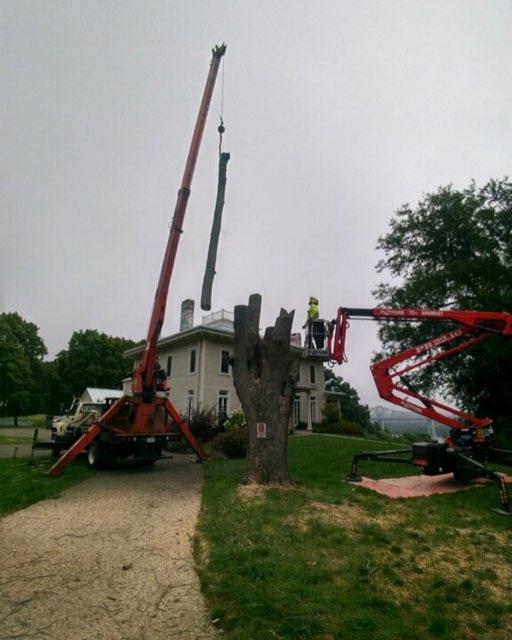
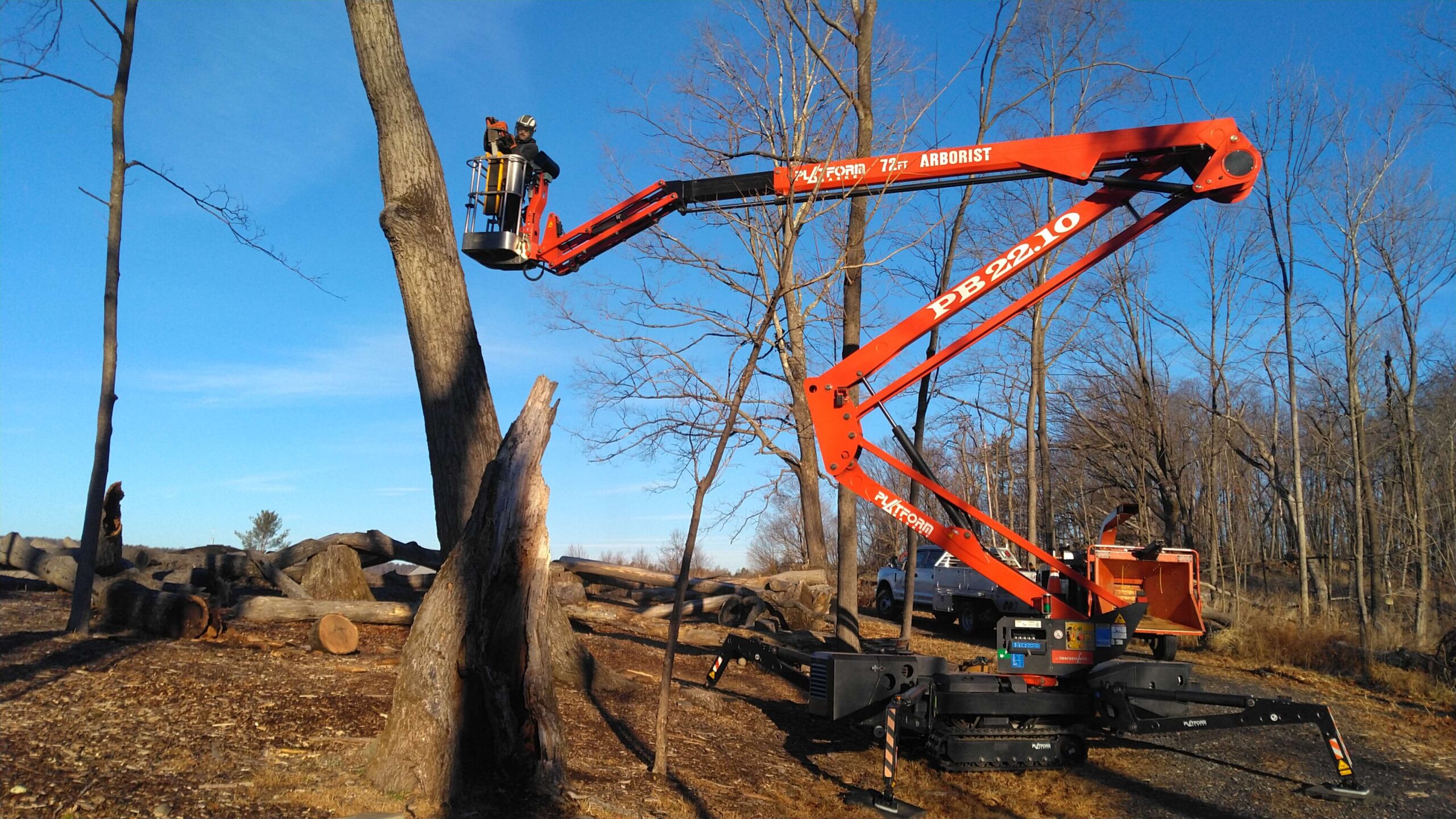
l crane used for tree removal and large tree care projects

No two tree care projects are exactly the same.

A tree’s size, species, condition, location, accessibility, proximity to homes or utility lines, and the equipment required to complete the work can all affect tree service costs.

Tree removal, for example, may require aerial lifts, cranes, stump grinders, advanced climbing and rigging equipment, or a combination of specialized equipment. That equipment needs to be purchased, transported, fueled, maintained, inspected, and repaired.

A professional tree company isn’t simply pricing the time it takes to cut or prune a tree. The estimate reflects what is required to complete the work safely, efficiently, and with proper care for your property.

Proper Insurance Is Part of Professional Tree Care

Tree Care Industry Association TCIA accreditation logo for professional tree care companies

Tree work comes with significant risk, which makes proper insurance essential.

Professional tree services carry liability insurance to protect against property damage as well as workers’ compensation coverage for their employees.

Those policies are a significant business expense, but they’re also an important part of operating a responsible tree care company.

When comparing tree service estimates, it’s worth considering whether you’re actually comparing the same level of service and protection. A lower estimate may not include the same insurance coverage, trained workforce, equipment, or safety practices.

Before hiring a tree service, don’t be afraid to ask about liability and workers’ compensation insurance. Professional companies should be able to clearly explain the coverage they carry.

You’re Paying for a Skilled, Professional Crew
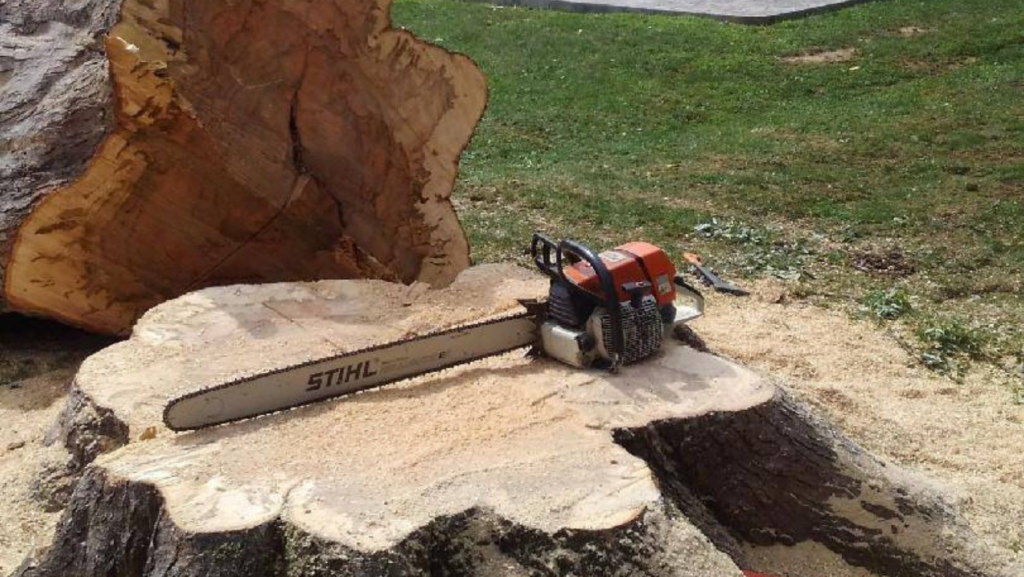
Large tree trunk cut during professional tree removal service

Another major part of tree service cost is the people performing the work.

At Powell’s Tree Care, our employees are professionals, and everyone is paid properly through payroll. You’re hiring a trained crew whose knowledge and experience are part of the service you’re receiving.

Tree work requires much more than physical strength or knowing how to operate a chainsaw.

Professional tree care involves understanding tree biology, structure, pruning practices, risk assessment, climbing and rigging techniques, equipment operation, and jobsite safety.

As we discuss in our guide to what makes a professional tree service, professional tree care also involves ongoing education, training, and staying current with industry standards and best practices.

Those investments aren’t always visible when you look at a finished tree removal or pruning job, but they’re an important part of what you’re paying for.

Experience Matters in Tree Work
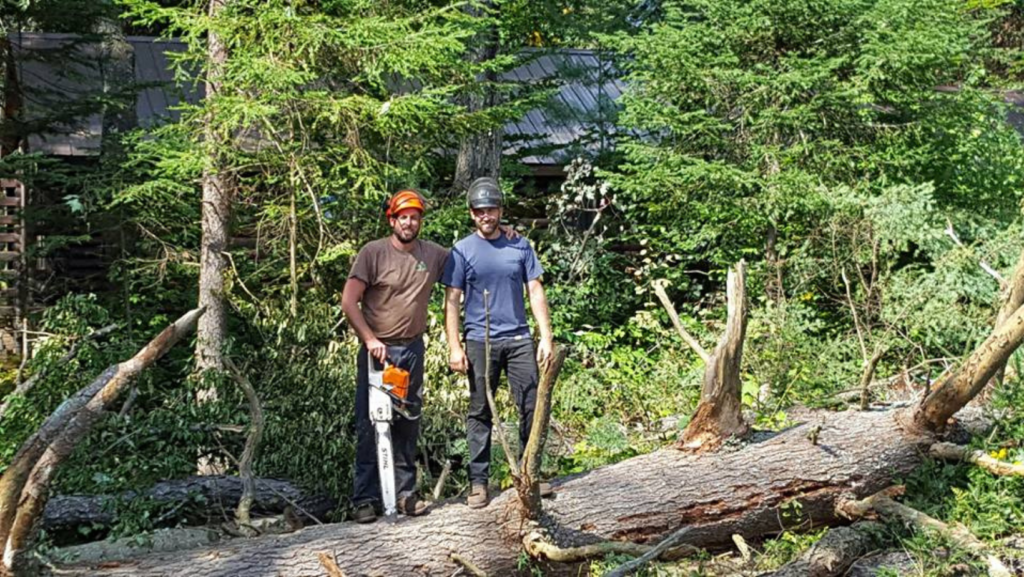
Professional tree care crew working together on a tree service project

Trees don’t always behave exactly as expected.

Decay can be hidden inside a trunk or limb. Weight distribution can make a branch react differently once it’s cut. Access may be limited. A tree may be growing directly beside a home, driveway, fence, utility line, or another valuable part of the property.

Experience helps a professional tree crew recognize these challenges and determine the best way to approach them.

Ian has been working in the tree care industry for more than 20 years. That experience influences everything from evaluating a tree and selecting equipment to determining how the work should be completed safely.

It’s also why qualifications matter when you’re deciding who should work on your trees. Learn more about Why Hiring a Certified Arborist Matters and what professional knowledge can bring to your property.

Professional Tree Equipment Is a Major Investment
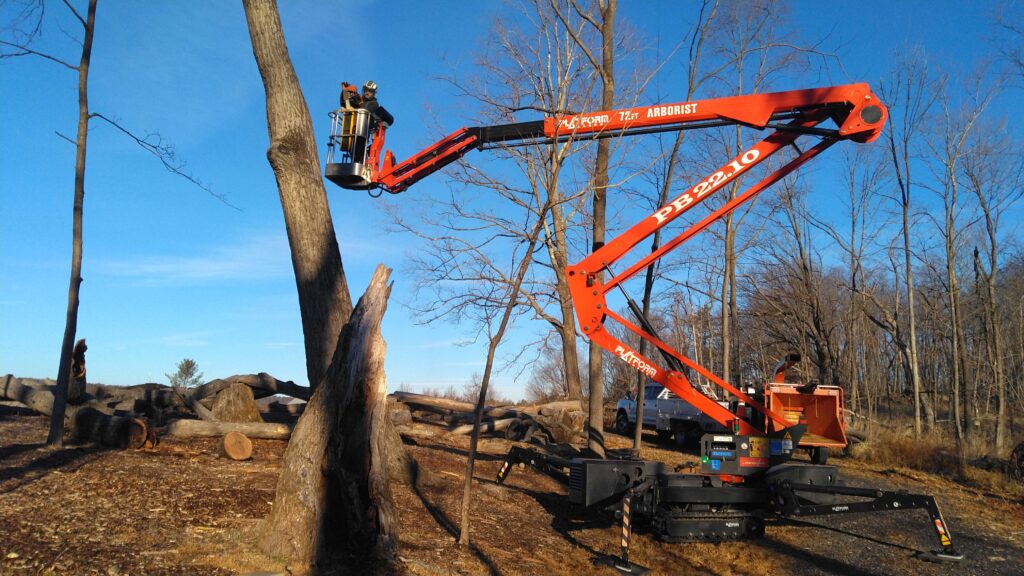
Crane and specialized equipment used for professional tree removal

Professional tree work requires specialized equipment for nearly every project.

Depending on the job, a crew may need aerial lifts, cranes, stump grinders, loaders, chippers, trucks, chainsaws, climbing equipment, ropes, rigging systems, and other specialized tools.

The investment doesn’t end when the equipment is purchased.

Professional equipment needs to be transported, fueled, inspected, maintained, and repaired so that it’s ready to perform safely and reliably on the job.

Having the appropriate equipment can also make tree work more efficient and help reduce unnecessary impact on the surrounding property.

Equipment can break down from time to time, even when it’s properly maintained. But investing in quality equipment and preventative maintenance helps reduce those issues and allows a professional crew to arrive prepared for the work they’re being asked to perform.

Protecting Your Property Is Part of the Cost, Too
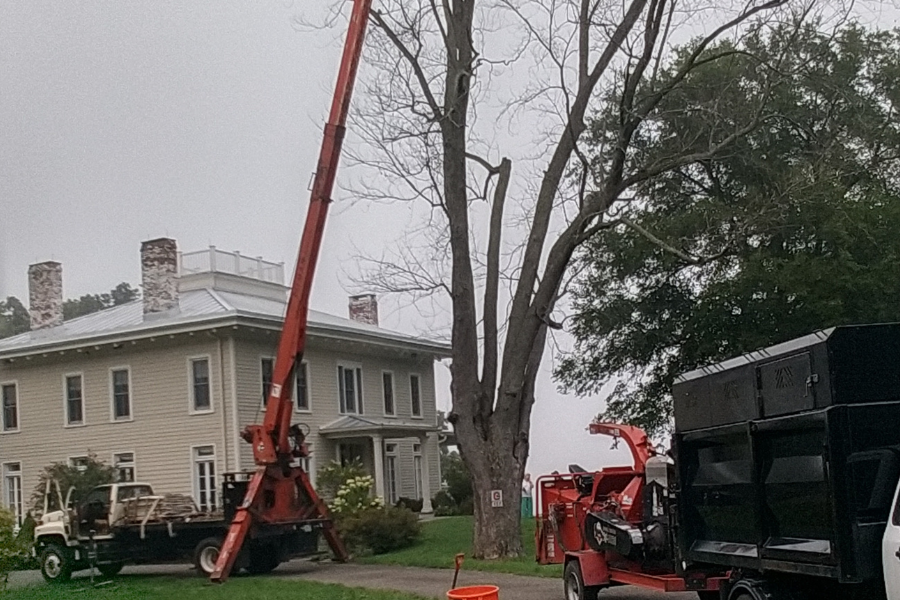
Professional tree service crew using a crane to safely remove a large tree

Getting heavy tree equipment into a backyard or across a lawn presents another challenge: how do you get the equipment where it needs to go without leaving the property a mess?

That’s something professional tree companies plan for before the work begins.

At Powell’s Tree Care, we invest in ground protection mats that allow us to move heavy equipment across lawns while helping distribute the weight and minimize damage.

Those mats are expensive. They’re also an example of an investment homeowners may never think about when looking at a tree service estimate.

The goal isn’t simply to get the equipment to the tree. It’s to consider your entire property and minimize the impact of the work wherever possible.

Safety Is Built Into the Cost of Professional Tree Service
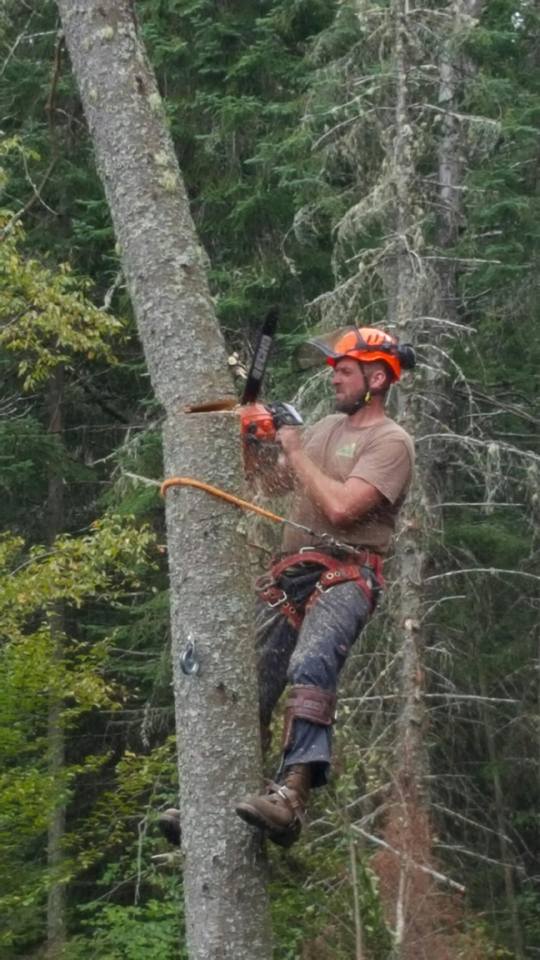
Certified arborist climbing a tree with professional tree care equipment

Tree care can be dangerous work.

Crews regularly work at significant heights and around heavy limbs, chainsaws, ropes, rigging systems, large equipment, buildings, vehicles, and utility lines.

Professional tree companies invest in training, equipment, communication, and jobsite procedures to manage those risks.

These precautions protect the crew, but they also help protect homeowners, businesses, neighboring properties, and anyone else around the jobsite.

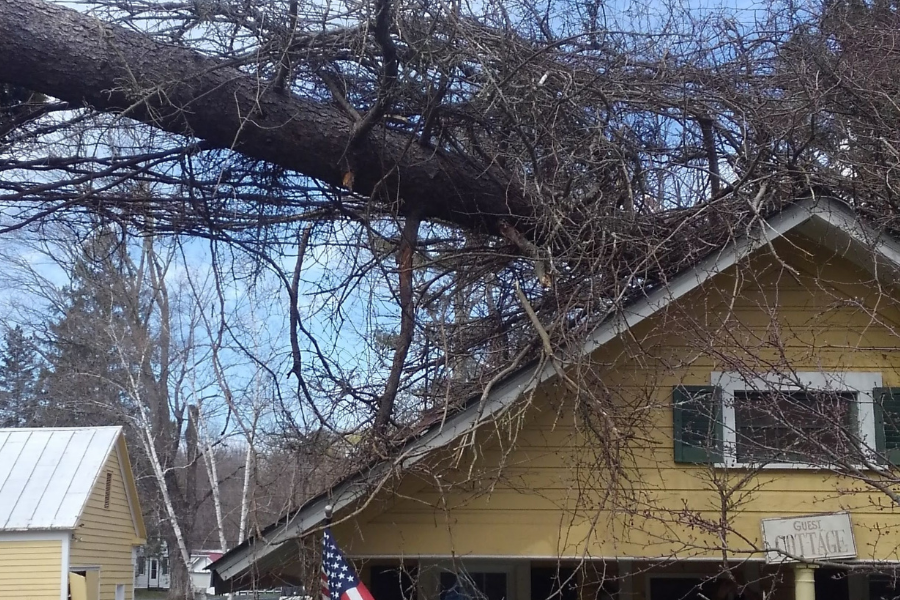
Professional knowledge becomes especially important when a tree has been compromised. Storm-damaged trees can have broken limbs, weakened structures, and hazards that aren’t always obvious from the ground.

What looks like a simple cleanup job can become dangerous very quickly without the proper knowledge and equipment.

Professional Tree Care Isn’t Always About Removing the Tree
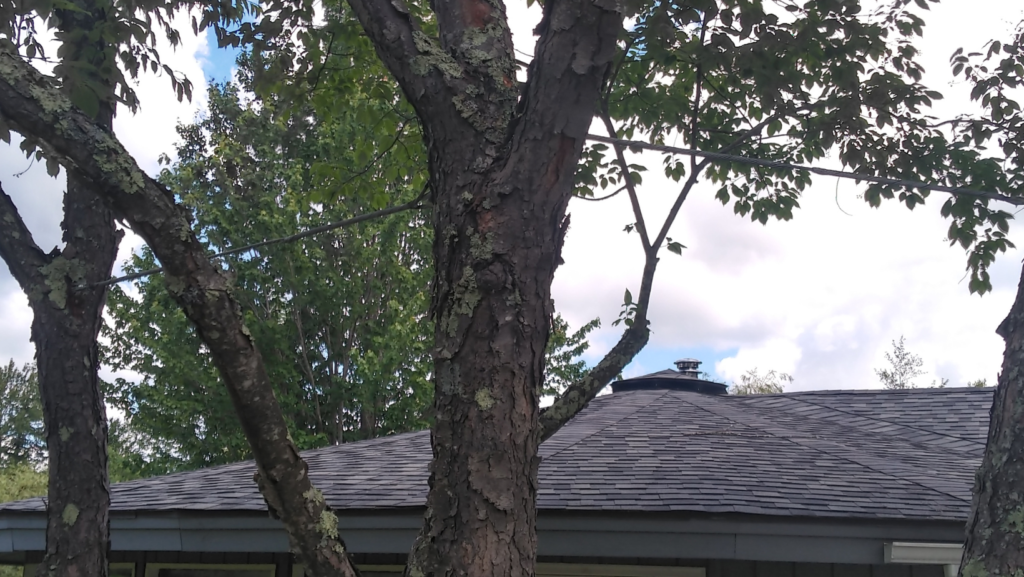
Professional arborist performing tree care high in a mature tree

When you’re paying for professional tree care, you’re also paying for someone to understand when a tree doesn’t need to come down.

A knowledgeable tree care professional can evaluate whether a tree is hazardous, declining, treatable, or simply in need of proper pruning and maintenance.

That knowledge matters because improper tree care can cause lasting damage.

For example, Certified Arborists don’t use climbing spikes for routine tree pruning because spikes create wounds in a healthy tree. The appropriate techniques and equipment depend on the work being performed.

Timing can matter as well. Understanding when to trim or prune trees in Greene County, NY can help support a tree’s health, structure, and long-term growth.

Professional tree care isn’t simply about completing a job. It’s about understanding how the work being performed today can affect the tree and property in the future.

Why Can Tree Service Estimates Be So Different?
It’s not unusual for homeowners to receive very different estimates for what appears to be the same tree work.

But two estimates aren’t necessarily offering the same service.

When comparing tree service costs, consider what’s behind each estimate.

Is the company properly insured? Are employees covered by workers’ compensation? Does the crew have professional training and experience? Are they using appropriate, well-maintained equipment? Are they taking steps to protect your lawn and property? What does cleanup include? Can they explain why they’re recommending a particular service?

Price is certainly part of choosing a tree service, but it shouldn’t be the only consideration.

A professional tree service should be able to explain what needs to be done, why they’re recommending it, and what’s involved in completing the work safely and responsibly.

So, Why Does Tree Care Cost So Much?
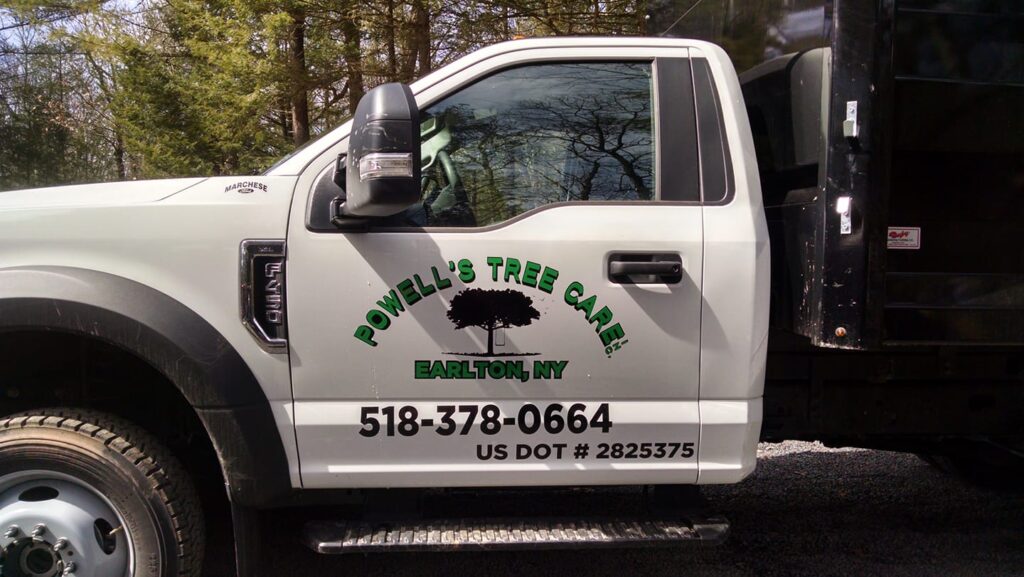
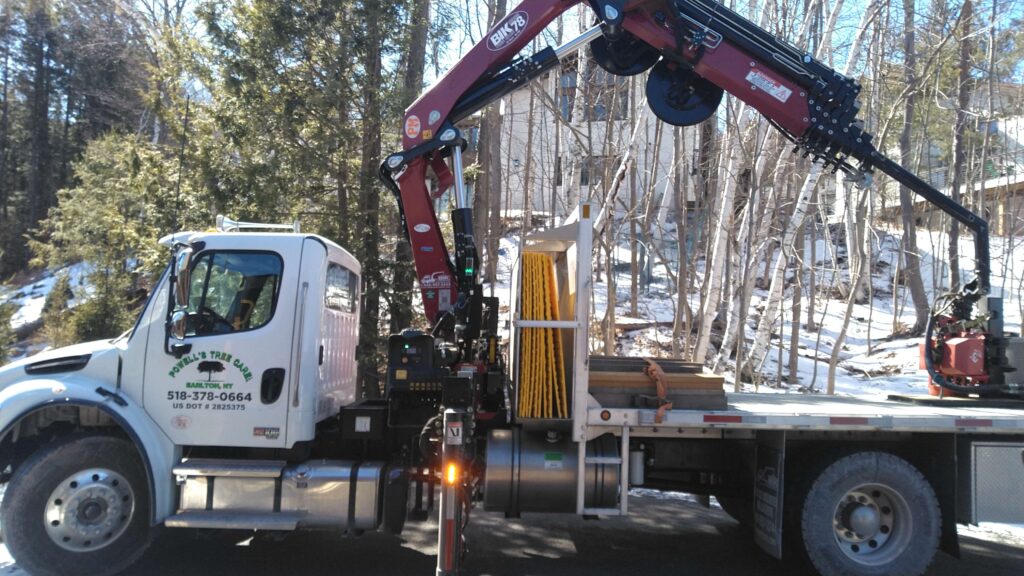
Powell's Tree Care truck providing professional tree service in Greene County NY

Ultimately, you’re paying for much more than the time a tree crew spends in your yard.

You’re paying for the years of experience that help the crew make informed decisions. You’re paying for skilled employees, liability and workers’ compensation insurance, specialized equipment, maintenance, safety training, professional tree care knowledge, and investments designed to protect your property.

All of those things are part of operating a professional tree service.

They’re also what allow a professional crew to arrive at your property prepared to do the job correctly.

Get an Estimate for Professional Tree Care in Greene County, NY
Powell's Tree Care Logo Earlton, NY

At Powell’s Tree Care, we’ll assess the tree, its location, accessibility, condition, and the equipment required to complete the work. We’ll then provide a recommendation based on the specific needs of your trees and property.

Whether you need professional tree removal, pruning, storm damage cleanup, or aren’t sure what your tree needs, we’re happy to help you understand your options.

Contact Powell’s Tree Care to schedule an evaluation and receive an estimate for professional tree service in Greene County, NY and the surrounding area.

What Makes a Professional Tree Service? Why Training, Education & Experience Matter

August 10, 2026

What Makes a Professional Tree Service? Why Training, Education & Experience Matter

When most people think about tree service, they probably picture a crew with chainsaws, ropes, a bucket truck, and maybe a wood chipper.

And thanks to the countless videos online showing tree work gone wrong, the industry doesn’t always have the best reputation.

But professional tree care is far more technical than simply knowing how to operate a chainsaw.

A professional tree service combines education, ongoing training, experience, safety practices, specialized equipment, and an understanding of how trees grow and respond to the work being performed.

When you’re hiring someone to work on the trees surrounding your home, business, vehicles, utility lines, and family, that distinction matters.

Tree Care Is a Skilled Profession

Caring for trees requires more than knowing how to cut them. It requires understanding how they grow, react, and recover.

Professional tree care requires an understanding of tree biology, structure, species, disease, pests, pruning practices, risk assessment, and much more. This is one of the reasons hiring a Certified Arborist matters. Certification demonstrates a commitment to professional knowledge, industry standards, and continued education in proper tree care.

Even tree removal requires significant knowledge and planning. A trained tree care professional needs to evaluate factors such as the tree’s condition, weight distribution, surrounding structures, potential hazards, equipment access, and how individual limbs or sections of the tree will react when cut.

What may look straightforward from the ground can require a tremendous amount of planning behind the scenes.

Professional Tree Care Requires Ongoing Education

One of the biggest misconceptions about the tree service industry is that experience with a chainsaw is enough.

For reputable tree care professionals, education doesn’t stop once they’ve learned how to climb or operate equipment.

Professionals within the industry may attend conferences, complete continuing education units (CEUs), participate in safety training, maintain industry certifications, and stay informed about evolving research and best practices in arboriculture.

That continuing education matters because the industry continues to evolve.

New research can change recommendations for pruning, tree health, pest and disease management, safety procedures, equipment use, and other aspects of tree care. Even the techniques used to access a tree can make a difference. For example, Certified Arborists don’t use climbing spikes for routine tree pruning because spikes can unnecessarily damage a healthy tree.

A professional tree service should be willing to keep learning and applying that knowledge in the field.

There’s a Difference Between Removing a Tree and Caring for Trees

Sometimes a tree does need to come down. But removal isn’t always the answer.

A knowledgeable tree care professional can help determine whether a tree is hazardous, declining, treatable, or simply in need of proper maintenance.

This is especially important when it comes to pruning.

Improper pruning can damage a tree, create structural problems, introduce unnecessary stress, and affect its health for years to come. Practices that may seem harmless can permanently alter how a tree grows. Even knowing when to trim or prune trees in Greene County, NY can depend on the tree species, its condition, and what you’re trying to accomplish through pruning.

Professional tree care isn’t just about getting the job done. It’s about understanding the impact that today’s work will have on the tree tomorrow.

Safety Isn’t Optional in Professional Tree Work

Tree care can be dangerous work.

Crews regularly work at significant heights and around heavy limbs, chainsaws, ropes, rigging systems, large equipment, buildings, vehicles, and electrical hazards.

Professional tree services take those risks seriously.

Training, communication, appropriate personal protective equipment, proper equipment maintenance, jobsite procedures, and careful planning all contribute to a safer work environment.

Those precautions don’t just protect the tree care crew. They also help protect your property and the people around the jobsite.

Professional knowledge becomes especially important when conditions are unpredictable. Storm-damaged trees can have broken limbs, weakened structures, and hazards that may not be obvious from the ground, making a professional assessment particularly important before attempting cleanup or removal.

Not All Tree Services Are the Same

Homeowners may receive dramatically different quotes for what appears to be the same tree work.

But the price isn’t always comparable to the same level of service.

When evaluating a tree service, consider what’s behind the estimate.

Are they properly insured? Do they invest in professional equipment? Do they participate in ongoing education and training? Do they understand proper pruning practices? Can they explain why they’re recommending a particular service? Are they taking appropriate safety precautions?

A professional tree service should be able to explain not only what they recommend doing, but why they recommend doing it.

How to Choose a Professional Tree Service

Before hiring a tree service, don’t be afraid to ask questions.

Ask about their experience, insurance, qualifications, safety practices, and approach to tree care. If they’re recommending that a tree be removed, ask why. If they’re suggesting pruning, ask what they hope to accomplish through the pruning.

Working with an experienced tree care professional means having someone who can evaluate the bigger picture and help you make an informed decision based on the health, structure, location, and condition of your trees.

Looking for a Professional Tree Service?

At Powell’s Tree Care, we believe our customers deserve to understand what’s happening on their property and why. Our goal isn’t simply to complete a job. It’s to provide knowledgeable, professional tree care and help our customers make informed decisions about their trees.

Whether you’re concerned about the health of a tree, need professional pruning, or aren’t sure if a tree should be removed, we’re happy to help you understand your options.

Contact Powell’s Tree Care to schedule an evaluation and get professional guidance for the trees on your property.

What to Do After Storm Damage to Your Trees

July 15, 2026

Strong winds, heavy rain, snow, and ice can all take a toll on your trees. After a storm passes, it can be difficult to know whether a tree is safe, needs pruning, or should be removed altogether.

While some storm damage is obvious, other problems may not become visible until weeks or even months later. Knowing what to look for can help protect your property, your family, and the long-term health of your trees.

Here’s what you should do after a storm:

Inspect Your Property from a Safe Distance

Before walking around your yard, look for obvious hazards from a safe location.

Watch for:

  • Broken or hanging branches
  • Trees leaning more than usual
  • Cracks or splits in the trunk
  • Uprooted trees or exposed roots
  • Branches resting on power lines

If you notice a tree touching power lines, stay away and contact your utility company immediately. Never attempt to remove branches from electrical lines yourself.

Look for Hidden Damage

Not all storm damage is immediately noticeable.

A tree may appear healthy while hiding structural damage that could cause problems later.

Signs to watch for include:

  • Fresh cracks in the trunk
  • Split branch unions
  • Missing bark
  • Large broken limbs
  • Soil lifting around the base of the tree
  • Sudden leaning after the storm

These issues may indicate that the tree’s structural stability has been compromised.

Don’t Start Cutting Right Away

It can be tempting to remove damaged branches yourself, but improper pruning often causes more harm than good.

Avoid:

  • Climbing damaged trees
  • Cutting large limbs without proper equipment
  • Removing branches under tension
  • Using a ladder with a chainsaw

Storm-damaged trees can behave unpredictably, making DIY cleanup dangerous.

Know When a Tree Can Be Saved

Many trees recover surprisingly well after storm damage.

A certified arborist can often preserve a tree by:

  • Removing damaged limbs
  • Cabling and bracing
  • Correcting broken branch structure
  • Pruning for future stability
  • Monitoring recovery over time

Early intervention can prevent small problems from becoming major hazards.

When Tree Removal May Be Necessary

Sometimes removal is the safest option.

Removal may be recommended if:

  • The trunk has split significantly.
  • More than half of the canopy has been lost.
  • The tree is leaning toward a home or structure.
  • The root system has been severely damaged.
  • The tree poses an immediate safety hazard.

A professional assessment can determine whether removal is truly necessary or if the tree can safely recover.

Why Professional Tree Inspections Matter

Storm damage isn’t always obvious, and every tree responds differently.

A certified arborist can evaluate:

  • Structural integrity
  • Root stability
  • Overall tree health
  • Future risk of failure
  • Whether pruning or removal is the best solution

Having a tree inspected after a major storm provides peace of mind and helps prevent future property damage.

Protect Your Trees Before the Next Storm

Routine maintenance is one of the best ways to reduce storm damage.

Regular pruning removes weak or dead branches, improves tree structure, and allows trees to better withstand high winds and heavy snow.

Keeping trees healthy year-round can significantly reduce the likelihood of major failures during severe weather.

Schedule a Storm Damage Tree Inspection in Greene County, NY

If your property has experienced storm damage, don’t wait for a damaged tree to become a bigger problem.

The team at Powell’s Tree Care provides professional tree inspections, storm damage cleanup, emergency tree removal, and expert pruning throughout Greene County and the surrounding communities.

Contact Powell’s Tree Care today to schedule a storm damage assessment and keep your property safe after severe weather.

Why Certified Arborists Don’t Use Climbing Spikes for Routine Tree Pruning

June 16, 2026

Why Certified Arborists Don’t Use Climbing Spikes for Routine Tree Pruning

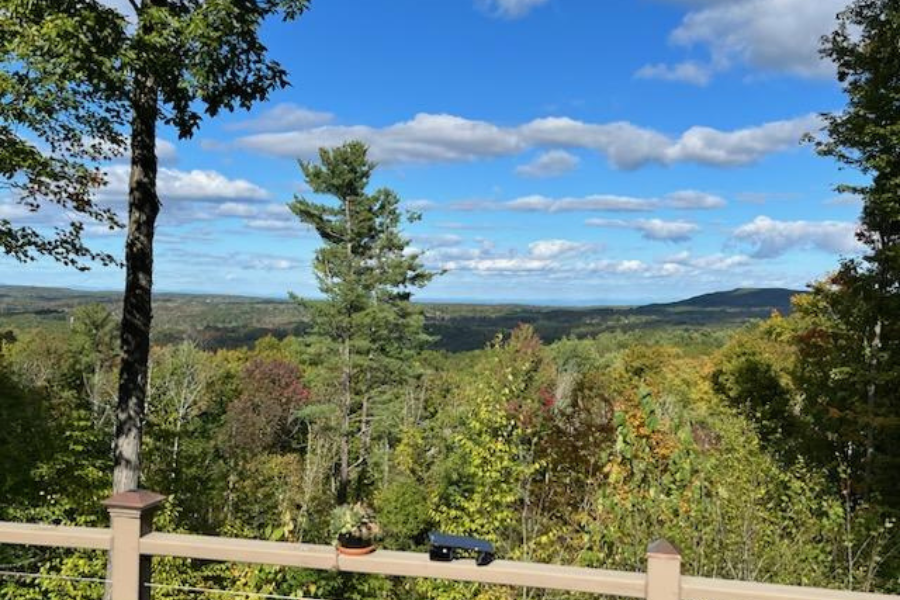
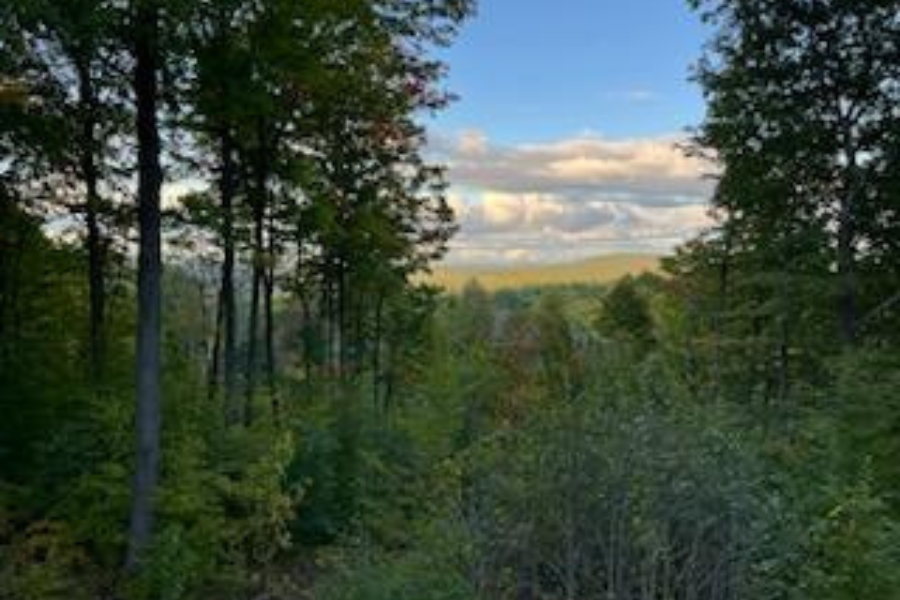
Scenic view overlooking the forested Catskill Mountains from a residential deck in Greene County, New York.

When homeowners hire a tree service company, they often focus on price, availability, or whether the company can complete the job quickly. However, the techniques used during pruning can have a significant impact on the long-term health of your trees.

One practice that separates professional arborists from less experienced tree workers is the use (or avoidance) of climbing spikes during routine tree pruning.

At Powell’s Tree Care, we follow industry best practices and use spike-less pruning techniques whenever possible to protect the health and longevity of the trees we care for throughout Greene County and the surrounding area.

What Are Climbing Spikes?

Climbing spikes,are metal spikes attached to a climber’s boots. They allow a tree worker to ascend a tree by repeatedly puncturing the bark and underlying tissue.

While spikes can be an effective tool in certain situations, they should not be used on healthy trees that are being pruned and preserved.

Every step taken with climbing spikes creates a wound in the tree’s bark. Depending on the size of the tree and the work being performed, hundreds of punctures may be made during a single climb.

When Are Climbing Spikes Appropriate?

There are situations where climbing spikes are considered acceptable and necessary.

Spikes are commonly used during:

  • Tree removals
  • Hazard tree removals
  • Emergency storm damage work
  • Dead tree removals

In these situations, preserving the tree’s health is no longer the primary concern because the tree is being removed or has already died.

For healthy trees receiving routine maintenance, industry standards recommend alternative climbing methods whenever possible.

Why Certified Arborists Avoid Climbing Spikes During Routine Pruning

Certified arborists are trained to prioritize tree health and follow pruning practices supported by industry research and standards.

Using climbing spikes on healthy trees can:

Create Unnecessary Wounds

Every puncture breaks through the bark, which serves as the tree’s natural protective barrier. These wounds can take time to seal and may create entry points for insects, fungi, and disease.

Increase Stress on the Tree

Trees already experience stress from environmental factors such as drought, storms, pests, and construction activity. Additional wounds caused by spikes can increase that stress and impact overall health.

Leave Visible Damage

In some species, spike wounds can remain visible for years and affect the tree’s appearance. This can be especially concerning for mature shade trees and ornamental trees that contribute significantly to a property’s curb appeal.

Compromise Long-Term Health

While a healthy tree can often recover from a small number of wounds, repeated spike damage over time may increase vulnerability to decay and disease.

What Is Spike-less Pruning?

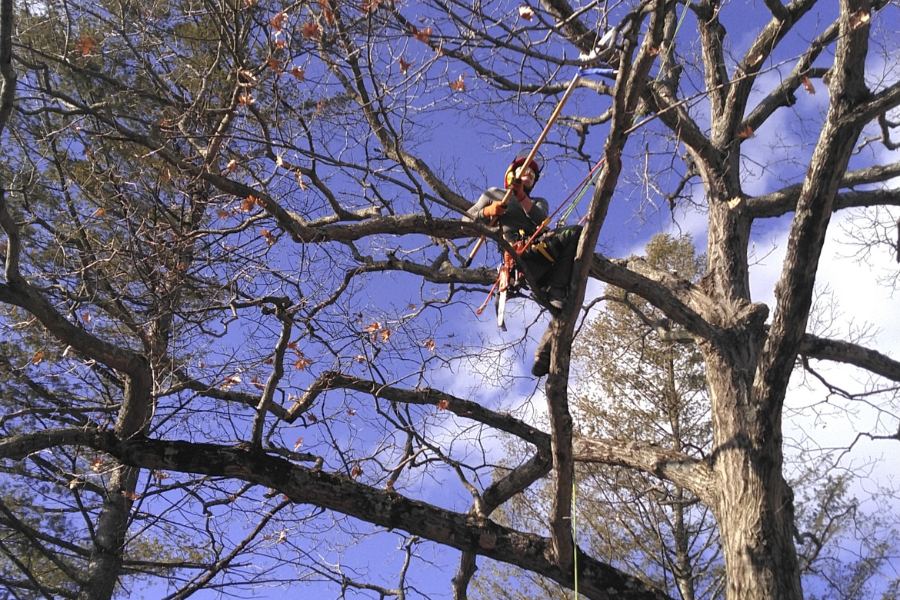
Spike-less pruning uses climbing ropes, harnesses,and advanced climbing techniques that allow arborists to safely access a tree without puncturing the bark.

This approach allows arborists to:

  • Safely reach pruning locations
  • Protect tree bark and vascular tissue
  • Minimize stress on the tree
  • Preserve long-term tree health
  • Follow professional industry standards

For trees that are being maintained rather than removed, spike-less climbing is widely recognized as the preferred method.

Arborist pruning tree branches in Greene County NY using professional tree trimming techniques

Why Proper Pruning Matters

Tree pruning is about much more than simply removing branches.

Proper pruning can help:

  • Improve tree structure
  • Remove dead or damaged limbs
  • Reduce storm damage risk
  • Increase clearance from structures and utilities
  • Improve airflow throughout the canopy
  • Support long-term tree health

Just as important as which branches are removed is how the work is performed. Proper climbing and pruning techniques help ensure that maintenance benefits the tree rather than causing unintended harm.

Why Hiring a Certified Arborist Makes a Difference

Not all tree service companies follow the same standards.

Certified arborists receive specialized training in tree biology, pruning techniques, tree risk assessment, and proper maintenance practices. Their goal is not simply to complete a job, but to help trees remain healthy, safe, and structurally sound for years to come.

When evaluating tree care providers, it’s worth asking how they access trees during pruning and whether they use spike-less climbing techniques on healthy trees.

The answer can tell you a great deal about their approach to tree care.

Schedule Professional Tree Pruning in Greene County, NY

At Powell’s Tree Care, we believe healthy trees deserve healthy pruning practices. Our team follows industry standards and uses professional climbing and pruning techniques designed to protect the long-term health of your trees.

Whether you need routine pruning, hazardous limb removal, storm damage cleanup, or a professional tree assessment, we’re here to help.

Contact Powell’s Tree Care today to schedule an estimate and learn how proper pruning can help protect your trees for years to come.

Why Hire a Certified Arborist

May 21, 2026

Why Hire a Certified Arborist

Proper tree care involves much more than simply cutting branches or removing trees. Trees are valuable parts of your property, and caring for them correctly requires knowledge, training, and experience.

Homeowners throughout Greene County often search for tree services when dealing with damaged trees, overgrown branches, or safety concerns. Choosing a certified arborist helps ensure the work is done safely, professionally, and with the long-term health of your trees in mind.

What Is a Certified Arborist?

A certified arborist is a tree care professional who has earned certification through the International Society of Arboriculture (ISA). This certification requires extensive knowledge of tree biology, proper pruning techniques, tree health, safety practices, and ongoing education.

ISA Certified Arborists must:

-Pass a comprehensive certification exam

-Follow professional industry standards

-Stay current with modern tree care practices

-Continue education to maintain certification

Hiring a certified arborist means working with someone who understands how to properly care for trees rather than simply removing them.

Why Professional Tree Care Matters

Tree work can be dangerous and highly technical. Improper pruning or tree removal can damage trees, create safety risks, or negatively impact your property.

A certified arborist can help:

-Identify hazardous trees

-Recommend proper pruning techniques

-Improve tree health and structure

-Reduce storm damage risks

-Determine when removal is necessary

Professional tree care helps protect both your landscape and your investment.

Protecting the Health of Your Trees

Healthy trees add beauty, shade, and value to your property. Poor pruning practices or improper tree work can lead to long-term structural problems, disease, and unhealthy growth.

Certified arborists understand how different tree species respond to pruning and maintenance. Proper care helps preserve the health, appearance, and longevity of your trees.

Choosing the Right Tree Service Company

Not all tree service companies have the same training, experience, or insurance coverage. When hiring a tree service company, homeowners should look for:

-ISA Certified Arborists

-Proper liability and workers’ compensation insurance

-Professional equipment

-Experience with safe tree care practices

Working with an experienced, insured, and certified team provides peace of mind and helps ensure the job is done correctly.

Certified Arborist Services in Greene County NY

Powell’s Tree Care provides professional tree removal, pruning, and arborist services throughout Greene County and surrounding communities including Coxsackie, Athens, Catskill, and Windham.

If you have questions about the health or safety of your trees, our team can evaluate your property and provide professional recommendations tailored to your needs.

Request an Estimate

  • Page 1
  • Page 2
  • Go to Next Page »

COPYRIGHT © 2026 · PRIVACY POLICY · DESIGN BY REACH CREATIVE